Told a vault is required? How to find out who is actually requiring it
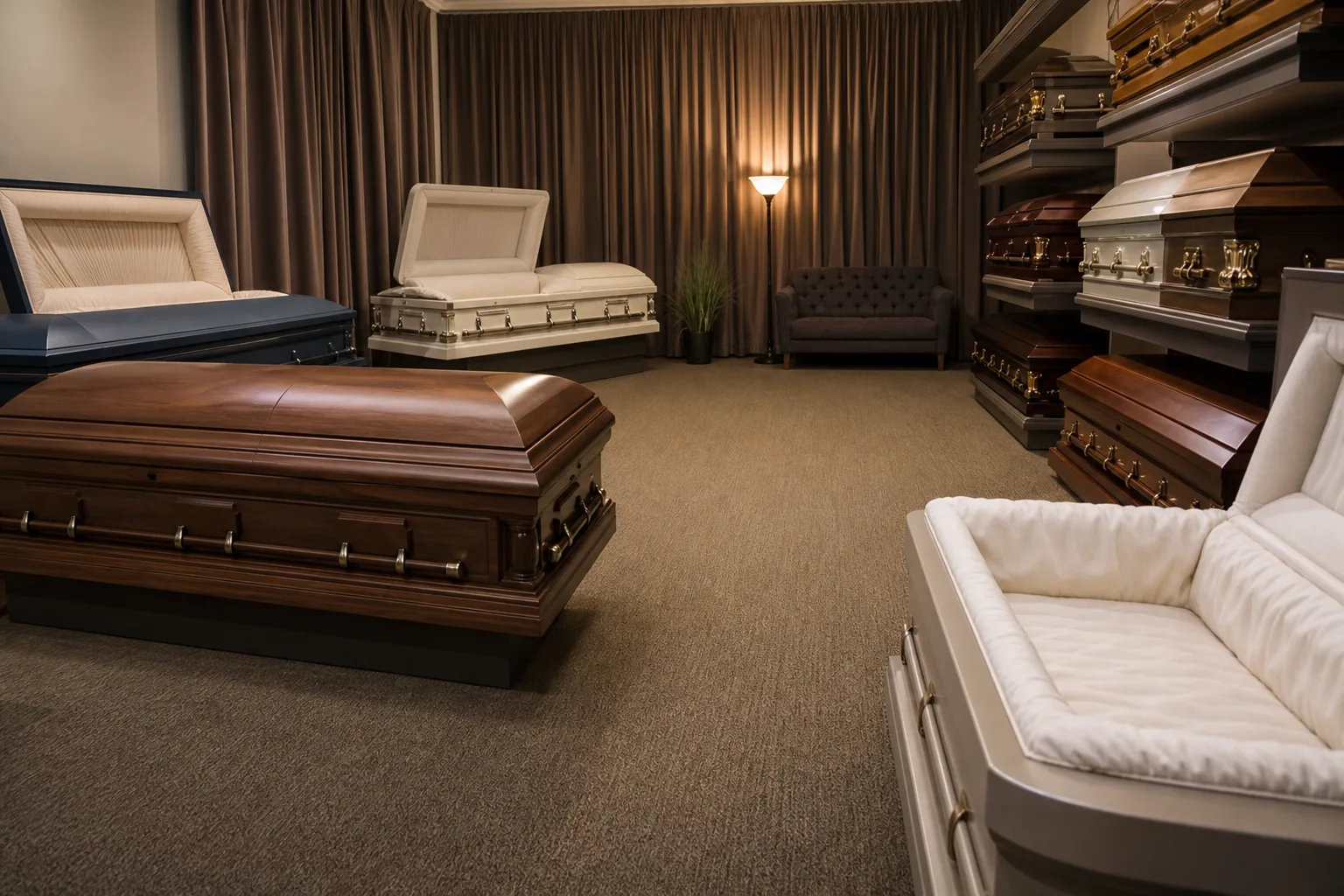
Settling is the real concern. Backfilled soil never returns to its original compaction, so untreated graves sink and pool water. Cemeteries require containers to keep the surface level for mowers and flat markers.
Grave liner defined. A grave liner is unlined poured concrete, usually cast in two or three pieces, with a lid that keys or rests in place. It is built to bear weight and nothing else.
Burial vault defined. A vault is a heavier one-piece shell with a bonded interior lining and a sealing lip or gasket at the lid. Linings range from plastic and ABS up to stainless steel, copper and bronze.
| Item | What it means |
|---|---|
| Where the price gap sits | The unlined liner is normally the least expensive item in the outer container section of the price list, often by a wide multiple. Lined vaults climb through tiers priced by lining material. |
| State law rarely applies | Statutes generally address permits, transportation, embalming conditions and licensing, not what surrounds the casket. The requirement almost always originates with the cemetery. |
| Interment rights carry conditions | When you buy a grave you buy interment rights subject to the cemetery's published rules. Those rules are the document that actually governs the container question. |
Somewhere between choosing a casket and signing the contract, a line appears on the statement of goods and services for an outer burial container, and it is usually explained with a phrase like "the cemetery requires this." That may be true. It is also the point where two separate questions get collapsed into one, because the requirement to line a grave and the requirement to buy a particular product from a particular seller are different requirements, coming from different places, carrying different prices. A careful reader pulls them apart before agreeing to either.
What the cemetery is actually trying to prevent
A grave is a hole roughly seven feet deep, refilled with soil that will never again be as compacted as the ground it came from. Over months and years, the casket and the loose backfill settle, and the surface sinks, sometimes several inches, sometimes enough to tilt a flat marker or open a depression that collects water. Grounds crews then have to top-dress, relevel and reseed. An outer burial container, a rigid box that surrounds the casket and carries the weight of the earth and the mowing equipment above it, is the cemetery's answer to that maintenance problem. The concern is structural, not ceremonial.
That distinction matters because it tells you what the cemetery genuinely needs. A container that holds its shape under load solves the settling problem completely. Anything added beyond that, and there is a great deal that can be added, is solving a different problem, one the cemetery has no stake in.
The plain box and the lined vault, side by side
The simplest product is a grave liner, sometimes called a sectional box or a rough box: unlined poured concrete, often in two or three pieces, with a lid that rests or keys into place. It is not sealed, it is not lined, and it is not finished. Its whole job is to bear weight. A burial vault is the same idea built heavier, with a continuous shell, a lining of plastic, ABS, stainless steel, copper or bronze bonded to the inside, a sealing lip or gasket where the lid meets the base, and in many cases an exterior finish, a nameplate and a warranty against the entry of water and soil.
On a price list the two live in different neighborhoods. The unlined liner sits at or near the bottom of the outer container section, frequently by a wide multiple, while lined and sealed vaults climb through several tiers of lining material toward the metal-lined models at the top. The performance difference the cemetery cares about, resistance to collapse, is largely satisfied by the cheapest item on that list. Everything above it is bought for other reasons, and those reasons are yours to weigh rather than anyone else's to assert.
State law says less than you think
No state statute in general practice requires that a body be buried inside an outer container. Burial law tends to govern disposition, permits, transportation, embalming under specified conditions, and the licensing of funeral establishments, not the hardware placed in the ground. The requirement almost always comes from the cemetery, as a condition of the interment rights you purchased, and cemeteries are private or municipal operators writing their own rules. The Federal Trade Commission is responsible for the rules governing how funeral providers disclose prices and represent legal requirements to families, which is why a funeral home should be able to tell you plainly that a container is cemetery policy rather than law.
Ask the cemetery, and ask for it in writing
Call the cemetery office directly, not the funeral home, and ask for the section of the rules and regulations that covers outer burial containers. Ask three things: whether a container is required at all in the section where the grave is located, whether an unlined liner satisfies the rule, and whether the cemetery sells or requires any particular brand. Ask for the answer by email or as a scanned page. Cemeteries routinely provide this, since the rules are a published document given to lot owners, and having the page in hand converts a verbal assurance into something you can hold up against the funeral home's price list.
Sections within one cemetery can differ, with lawn-crypt areas and flat-marker sections carrying stricter rules than older sections with upright monuments. A container purchased from a third party must generally be accepted, and the cemetery's own installation and opening charges are separate line items worth confirming at the same call. Getting the written rule takes one phone call and one email, and it usually narrows the decision to a single honest choice.